












Новости и блог
Падение напряжения в предохранителе постоянного тока в зависимости от тока: линейные характеристики, повышение температуры и оптимизация.

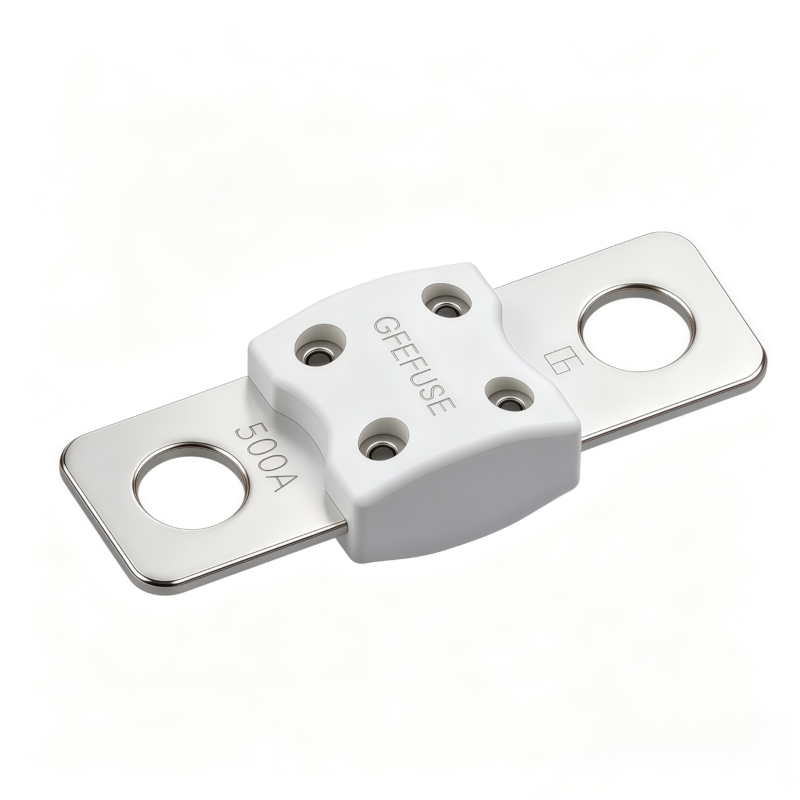
Падение напряжения в предохранителе постоянного тока в зависимости от тока: линейные характеристики, повышение температуры и оптимизация.
Introduction
In high-power DC systems including energy storage batteries, photovoltaic power systems, electric vehicles, DC motor controllers and industrial DC distribution networks, DC fuse voltage drop is a critical parameter that directly affects system efficiency, thermal stability and long-term operational safety.
Most design engineers focus only on fuse rated current and breaking capacity. However, the voltage drop of a DC fuse is not a fixed value. It changes dynamically with operating current, temperature and load duration.
This article explains the physical relationship between DC fuse voltage drop and current, linear working characteristics, non-linear overload behavior, temperature rise mechanism and practical optimization methods for high-current DC applications.
1. Basic Principle and Formula
The voltage drop of a DC fuse follows Ohm’s Law:
ΔU = I × R
Where:
- ΔU = Fuse DC voltage drop (V)
- I = Operating current (A)
- R = Total internal resistance of the fuse
The total resistance includes fuse element resistance, end cap resistance and contact resistance. Although DC fuses feature milliohm-level low resistance, significant voltage loss and heat generation will occur under 50A–700A high-current operating conditions.
2. Linear Relationship in Normal Operating Range
Within the rated current range and stable ambient temperature:
DC fuse voltage drop increases linearly with current.
Key Features:
- Internal resistance remains stable
- Temperature rise is controlled
- Power loss increases proportionally
- System performance is predictable and calculable
This linear zone is the standard test condition for manufacturer datasheet voltage drop parameters. In daily steady-state operation, the higher the current, the higher the proportional voltage drop.
3. Non-Linear Voltage Rise Under Overload Conditions
When the operating current exceeds the rated value, continuous heat accumulation changes the metal resistivity of the fuse element.
A small current increase leads to a sharp resistance rise and non-linear voltage drop surge.
This non-linear characteristic distinguishes DC fuses from fixed resistors.
3.1 Mild Overload
- Gradual heat accumulation
- Slight internal resistance increase
- Voltage drop higher than theoretical linear value
- Accelerated fuse aging under long-term operation
3.2 Severe Overload and Short Circuit
- Instant extreme temperature rise
- Rapid resistance multiplication
- Sharp voltage drop surge
- Accumulated I²t energy triggers fuse melting and circuit breaking
In short:
Normal operation follows linear voltage-current rules. Overload operation generates non-linear voltage spikes for circuit protection.
4. Why Voltage Drop Matters More for DC Systems
Unlike AC circuits with natural zero-crossing arc extinction, DC current is continuous and stable:
- Heat cannot be released periodically
- Temperature accumulates continuously
- Small resistance deviation causes obvious thermal drift
For energy storage systems, electric vehicles and high-voltage DC equipment, neglecting fuse voltage drop will result in:
- Insufficient system working voltage
- Excessive internal temperature
- Unexpected fuse blowing
- Shortened component service life
5. Main Factors Affecting DC Fuse Voltage Drop
1 Fuse Internal Resistance
Low-resistance fuse structures effectively reduce voltage drop under high current, making them suitable for inverters, battery packs and high-power DC control systems.
2 Operating Temperature and Environment
Higher ambient temperature increases metal resistivity, raising voltage drop. Closed electrical cabinets and high-temperature working environments significantly amplify thermal drift.
3 Contact Resistance
Loose installation, oxidized terminals and poor contact greatly increase additional resistance, causing overheating and abnormal voltage drop in high-current circuits.
4 Continuous Operating Duration
Long-term full-load operation leads to subtle metal oxidation and structural changes, gradually increasing internal resistance and voltage drop over time.
6. Power Loss and Temperature Rise Mechanism
Fuse power loss formula:
P = I²R
Power loss is proportional to the square of the current. In high-current DC applications, minor resistance differences cause huge heat discrepancies.
Excessive voltage drop results in:
- Reduced overall system efficiency
- Continuous cabinet heat accumulation
- Premature fuse aging
- Potential thermal runaway risks
7. DC Fuse Selection and Voltage Drop Optimization
1 Use DC-Specific Low Voltage Drop Fuses
AC fuses cannot replace DC fuses. DC fuses adopt special melt materials and arc-extinguishing structures to ensure stable voltage drop performance and safe breaking.
2 Apply Reasonable Current Derating
A 1.2–1.5 times current margin avoids long-term full-load operation, stabilizing resistance and linear voltage characteristics.
3 Optimize Installation and Contact Condition
Keep terminals clean, ensure standard tightening torque, and eliminate oxidation to minimize additional contact resistance.
4 Strengthen Heat Dissipation in High-Temperature Scenarios
Effective heat dissipation stabilizes fuse temperature, maintaining consistent voltage drop performance.
5 Integrate Fuse Loss into System Voltage Budget
In high-power DC system design, fuse voltage drop must be calculated in the total system power loss to guarantee stable bus voltage output.
8. Conclusion
DC fuse voltage drop presents two typical characteristics under different operating conditions. Within the rated current range, voltage drop increases linearly with current. Under overload and short-circuit conditions, temperature rise causes resistance multiplication and non-linear voltage surge, enabling reliable overcurrent protection. Internal resistance, ambient temperature, contact status and operating duration are key influencing factors. Selecting low-voltage-drop DC fuses and optimizing thermal design significantly improve the efficiency, stability and service life of new energy DC power systems.
China EssFuse specializes in the professional manufacturing of DC fuses, fast-acting fuses, semiconductor fuses, high-speed fuses, automotive fuses, photovoltaic fuses, energy storage fuses, and other one-stop solutions.
AC Fuse Electric Arc Extinguishing