

News
Fast Acting vs Time Delay Fuse Usage & Selection Tips

According to the action response speed, UL248 standard fuses are divided into fast acting fuse and time delay slow blow fuse. Correct s...

Thermal Fuse vs Overcurrent Fuse for Energy Storage
In energy storage systems, thermal fuses and overcurrent fuses undertake different protection tasks and cannot replace each other.O...
How to Choose the Right Fuse for Electronic Equipment
Choosing suitable fuses is the basic work of circuit design and equipment assembly. Improper fuse selection will cause unstable circuit...

10kA vs 20kA Fuse Breaking Capacity Difference Guide
Breaking capacity is the core safety parameter of industrial fuses, which refers to the maximum short-circuit current that a fuse can s...

How to Choose 50A-600A High Current Industrial Fuse
High current fuses from 50A to 600A are widely used in industrial main power circuits, battery energy storage systems, heavy equipment,...
Pre-arcing Time and Post-arcing Time Calculation of High Speed Fuse
Pre-arcing time and post-arcing time are core performance parameters of high-speed fuses, widely used in semiconductor protection, new ...
Difference Between Automotive Fuse and Solar Fuse
Although both automotive fuses and solar fuses are used for overcurrent protection, they are designed for different working conditions ...
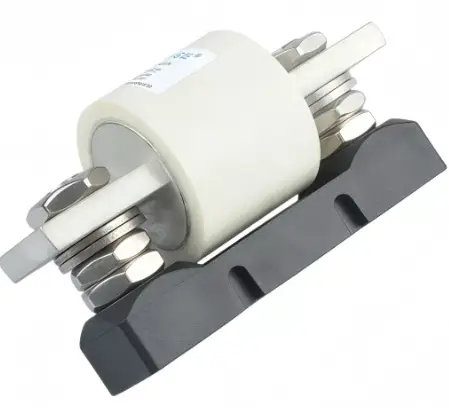
Semiconductor / Fast / PV / Energy Storage Fuses: Full IEC UL GB Standard Difference
Semiconductor / Fast Acting / PV / Energy Storage Fuse Full Standard ComparisonFuses are core overcurrent protection components for...
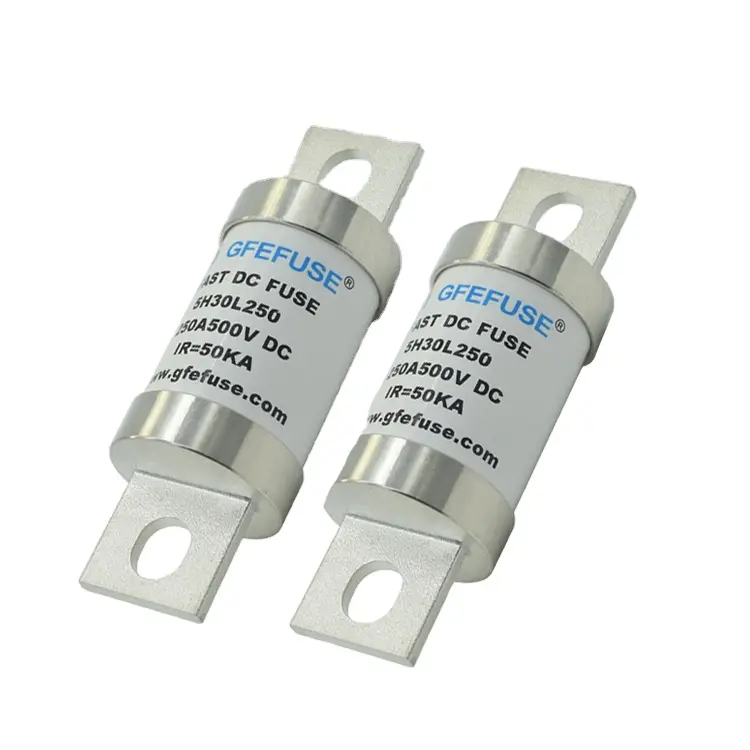
Battery Fuses for Lithium Battery Packs
Lithium battery packs have high energy density, and are very sensitive to overcurrent and short-circuit faults. Once a fault occurs, it...
UL Certified Fuses for Global Markets
UL certification is required for North America and high-standard projects. Essfuse UL certified fuses meet UL 248-13, UL 2579 for energ...