













News & Blog
Bolt‑on Fuses: Key Benefits for Energy Storage Systems

Bolt‑on Fuses: Key Benefits for Energy Storage Systems
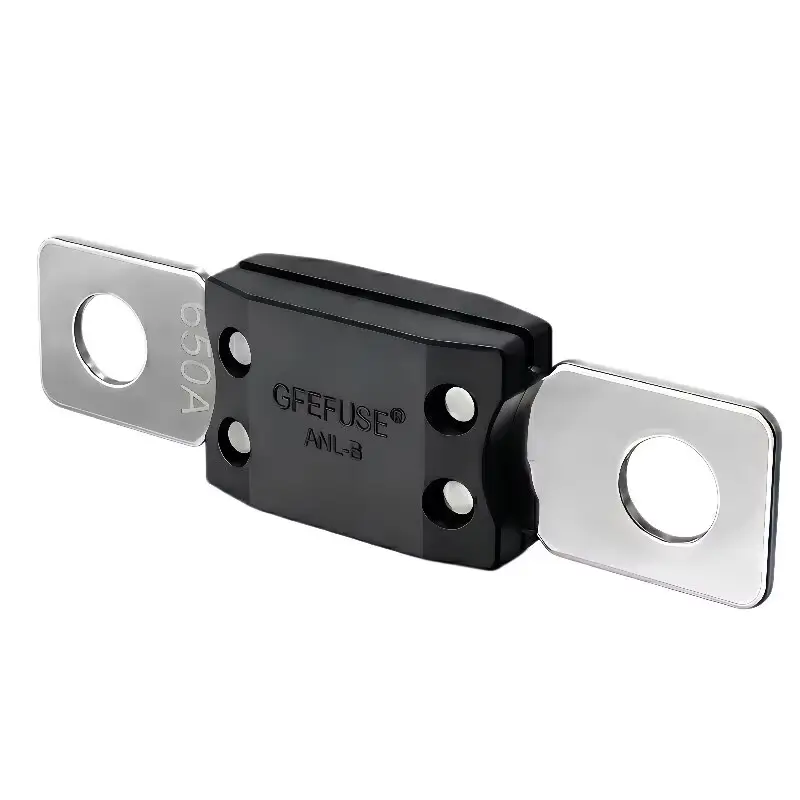
Energy storage systems require robust circuit protection to prevent short‑circuit and overload risks. Bolt‑on fuses are widely adopted in lithium‑ion battery energy storage equipment due to stable connection, high current capacity and compact structure.
Unlike blade fuses with clip connection, bolt‑on fuses are fastened by bolts. This connection method lowers contact resistance under high‑current working conditions, reducing heat generation during long‑time operation. For ESS cabinets, thermal stability directly affects equipment safety and service life.
Battery energy storage generates huge fault current during short‑circuit events. Ordinary clip‑type fuses may suffer high contact heating under continuous high‑current load. Bolt‑on installation creates firm mechanical contact, which keeps temperature rise within acceptable range even at rated full‑load current.
Core parameters to evaluate bolt‑on fuses for energy storage:
- Rated voltage: DC 125V‑150V is common for low‑voltage energy storage. Confirm DC voltage rating instead of AC value. DC arcs are harder to extinguish than AC arcs, so AC‑rated fuses cannot be reused for DC applications.
- Rated current: Match continuous working current of battery branch, avoid long‑term overload. Do not select fuse current too close to normal operating current.
- Breaking capacity: Sufficient short‑circuit breaking capability is critical for battery fault scenarios. Confirm interrupting rating under actual DC system voltage.
- Time‑current characteristic: Balance overload tolerance and fast short‑circuit interruption. It shall tolerate normal surge current and blow quickly during short‑circuit fault.
Installation tips:
‑ Use proper torque for bolt tightening to avoid over‑heating caused by loose contact. Too high torque may damage fuse ceramic housing.
‑ Keep proper insulation distance around fuse body. Avoid metal debris around installation position.
‑ Select matched busbar and cable according to rated current. Undersized conductors will bring extra temperature rise.
‑ Regular visual inspection is recommended for long‑run ESS projects.
Conclusion
Bolt‑on fuses are practical protection components for energy storage. Select correct specification based on system voltage, working current and expected short‑circuit current to guarantee whole‑system safety. Proper installation and maintenance also play important roles in long‑term reliable performance.