












Noticias y blog
Fusible de alta tensión para sistemas ESS, UPS y de almacenamiento de energía | Guía técnica

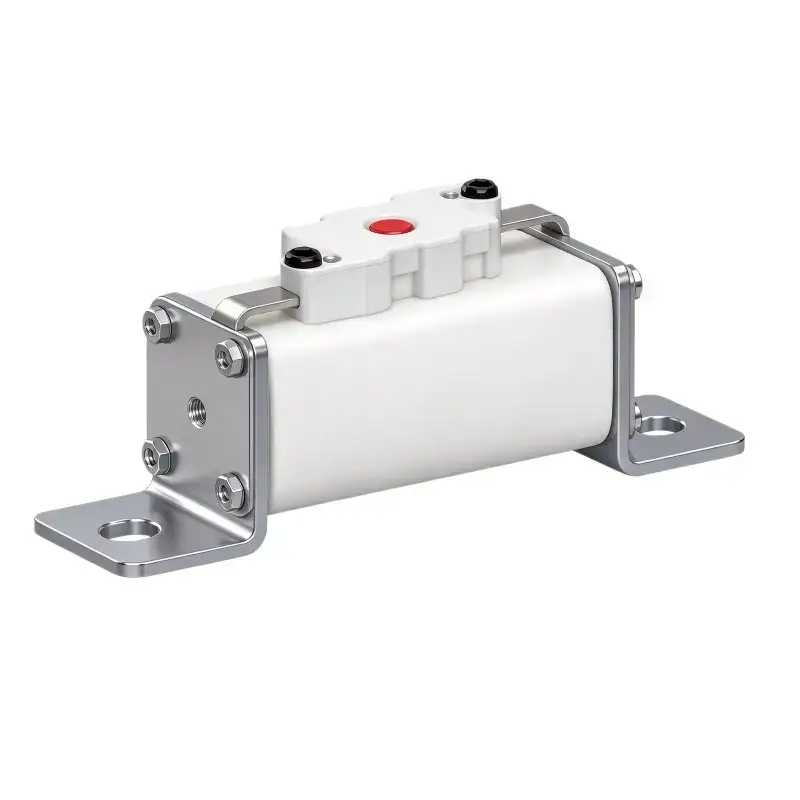
High Voltage Fuse for ESS, UPS & Energy Storage Systems: A Complete Technical Guide
As battery energy storage systems (ESS) and uninterruptible power supply (UPS) installations scale rapidly worldwide, reliable overcurrent protection has become a non-negotiable part of system safety and uptime. High voltage DC fuses are the first line of defense against short-circuit faults in battery strings, DC busbars, PCS converters and UPS DC links. Choosing the right high voltage fuse directly improves system safety, reduces maintenance costs and extends battery service life.
This guide explains how high voltage fuses work in ESS and UPS applications, what technical specifications matter most, and how to select and maintain them correctly for energy storage projects.
Why High Voltage DC Fuses Are Critical for Energy Storage Systems
Modern utility-scale and commercial ESS typically operate at 1000Vdc or 1500Vdc, with high-capacity lithium battery strings capable of delivering extremely high short-circuit currents within milliseconds. Without proper protection, a single internal short circuit in a battery module can propagate to the entire rack or cluster, leading to thermal runaway, fire or equipment destruction.
High voltage DC fuses installed at the battery string, combiner box and DC bus levels perform three core functions:
- Fast short-circuit isolation: High-speed aR class fuses interrupt fault currents in less than 5ms, preventing fault energy from reaching sensitive power electronics.
- Selective protection coordination: Properly rated fuses isolate only the faulty string while keeping healthy strings online, minimizing system downtime.
- Compliance with grid and safety codes: Most global ESS standards require dedicated overcurrent protection on each DC circuit to meet UL, IEC and local fire safety requirements.
Compared with AC fuses, DC fuses are engineered specifically to extinguish DC arcs, which are harder to break and have no natural zero-crossing point. This makes purpose-built high voltage DC fuses mandatory for battery energy storage applications.
Key Roles of High Voltage Fuses in UPS Systems
UPS systems — especially those used in data centers, industrial manufacturing and critical infrastructure — rely on high voltage fuses to protect both DC battery banks and AC input/output circuits.
DC Side Protection (Battery String & DC Bus)
Most three-phase online UPS systems use 380Vdc to 800Vdc battery buses, with higher-voltage configurations reaching 1000Vdc+. High voltage DC fuses are installed:
- At each battery string terminal
- On the main DC bus before the inverter/rectifier
- In parallel battery distribution cabinets
These fuses protect against internal battery faults, reverse polarity connection errors and DC bus short circuits.
AC Side & Inverter Protection
On the AC side, high voltage fuses protect UPS input rectifiers, output transformers and bypass circuits against overload and short-circuit events. For industrial UPS installations, fuses are often preferred over circuit breakers due to their higher breaking capacity, faster response and lower total cost of ownership.
Core Technical Requirements for ESS & UPS High Voltage Fuses
Not all fuses are suitable for high voltage energy storage and UPS environments. Below are the most critical specifications to evaluate.
1. Rated Voltage (Ue)
The fuse rated voltage must be equal to or higher than the maximum system voltage.
- 1000Vdc fuses: widely used in commercial and industrial ESS
- 1500Vdc fuses: standard for utility-scale solar + storage and large battery energy storage power stations
Using an underrated voltage fuse will result in unreliable arc extinction and possible fuse failure during interruption.
2. Breaking Capacity (Interrupting Rating)
ESS battery systems can deliver very high prospective short-circuit currents. A high voltage fuse must have sufficient breaking capacity to safely interrupt the maximum available fault current.
- Typical requirement for utility ESS: 100kA to 250kA @ 1500Vdc
- Typical requirement for UPS: 50kA to 150kA depending on battery capacity
3. Protection Class: aR High-Speed Fuses
For ESS and UPS DC short-circuit protection, aR class partial-range high-speed fuses are the industry standard. They offer:
- Very low I²t values for fast current limitation
- Excellent DC arc extinguishing performance
- Compact size suitable for battery rack and combiner box installation
4. Low Power Loss & Temperature Rise
High efficiency is critical for energy storage systems. Low watt-loss fuses reduce self-heating, improve system efficiency and extend fuse service life. They also help keep battery cabinet temperatures within design limits.
5. Standards & Certifications
Reliable high voltage ESS fuses should comply with:
- IEC 60269-4 (industrial fuses for semiconductor protection)
- UL 248-1 / UL 248-13 (low-voltage fuses, high-speed DC types)
- RoHS and REACH compliance for global market access
How to Select the Right High Voltage Fuse for Your Energy Storage Project
Correct fuse sizing is essential for both safety and system availability. Follow this step-by-step selection process.
1: Define System Parameters
Confirm:
- System DC voltage (nominal and maximum)
- Maximum prospective short-circuit current at the protection point
- Normal operating current and ambient temperature
- Installation space and mounting type (bolt-in, DIN rail, panel mount)
2: Choose Fuse Current Rating
Apply proper derating based on ambient temperature, enclosure type and expected continuous load. For most battery ESS applications, sizing the fuse at 1.25 to 1.5 times the maximum continuous operating current is a common starting point. Always verify with the fuse manufacturer’s temperature derating curves.
3: Verify Breaking Capacity
Ensure the fuse’s rated breaking capacity exceeds the maximum available fault current at the point of installation. When in doubt, choose a higher breaking capacity rating.
4: Check Coordination With Other Protection Devices
For multi-level protection (battery string fuse + rack fuse + main bus fuse), verify time-current characteristics to ensure selective tripping. A fault on one string should blow only the string fuse, not upstream fuses or breakers.
5: Confirm Mechanical & Environmental Compatibility
Check terminal dimensions, torque requirements, vibration rating and operating temperature range to match your cabinet design and site conditions.
For 1500Vdc utility-scale storage projects, high-speed square-body DC fuses with 200kA–250kA breaking capacity are the most widely adopted solution.
Common Application Scenarios
High voltage DC fuses are deployed across a wide range of energy storage and UPS use cases:
- Utility-scale battery energy storage systems (BESS): protection of 1500Vdc battery clusters, DC combiner boxes and PCS DC inputs
- Commercial & industrial energy storage: 1000Vdc systems for peak shaving, demand response and backup power
- Solar + storage hybrid systems: DC-side protection for PV-storage coupled architectures
- Data center UPS systems: high-reliability DC battery string and bus protection
- Microgrids and off-grid power systems: coordinated protection for battery banks and inverter interfaces
Maintenance & Safety Best Practices
Even the highest quality high voltage fuses require proper installation and maintenance to perform as designed.
Installation Best Practices
- Apply the correct mounting torque as specified by the manufacturer. Under-torquing causes overheating; over-torquing damages terminals.
- Inspect fuse holders and bus bars for flatness and cleanliness before installation.
- Never install a fuse with visible cracks, damaged terminals or moisture contamination.
Periodic Inspection
- Perform thermal imaging inspections during annual maintenance to detect loose connections or abnormal heating.
- Replace fuses that have interrupted a fault event, even if they appear visually intact.
- Keep spare fuses on site with matching current and voltage ratings.
Safety Reminders
- Always de-energize and lockout/tagout the circuit before inspecting or replacing fuses.
- Use appropriate personal protective equipment (PPE) for high voltage DC work.
- Do not replace a blown fuse with a higher current rating or different voltage class.
Frequently Asked Questions
Q: Can I use an AC fuse in a DC energy storage system?
No. AC fuses are designed to interrupt current at natural zero crossings, which do not exist in DC circuits. DC faults produce sustained arcs that AC fuses cannot reliably extinguish. Always use fuses specifically rated for DC voltage.
Q: What is the difference between aR and gG fuses for ESS?
aR fuses are partial-range high-speed fuses optimized for short-circuit protection with very fast response. gG fuses are full-range general-purpose fuses for both overload and short-circuit. For battery ESS short-circuit protection, aR high-speed DC fuses are the standard choice.
Q: What voltage rating do I need for a 1500Vdc ESS?
You should use fuses rated for at least 1500Vdc. Using a 1000Vdc fuse on a 1500Vdc system creates a serious arc flash and fire risk.
Q: How long do high voltage ESS fuses last?
Under normal operating conditions and within rated parameters, high-quality DC fuses can remain in service for 10 years or more. However, fuses that have experienced fault currents or repeated thermal cycling should be replaced promptly.
Final Thoughts
High voltage fuses may be small components, but they play a decisive role in the safety, reliability and compliance of ESS and UPS systems. Selecting the correct voltage, breaking capacity and protection class — and following proper installation and maintenance practices — will protect your battery investment, reduce downtime and meet global safety standards.
If you are designing a 1000Vdc or 1500Vdc energy storage or UPS project and need support with fuse selection and coordination, our technical team can provide customized protection solutions and dimensioning support.