












Actualités et blog
Comment choisir le bon fusible pour les bornes de recharge de véhicules électriques : guide complet

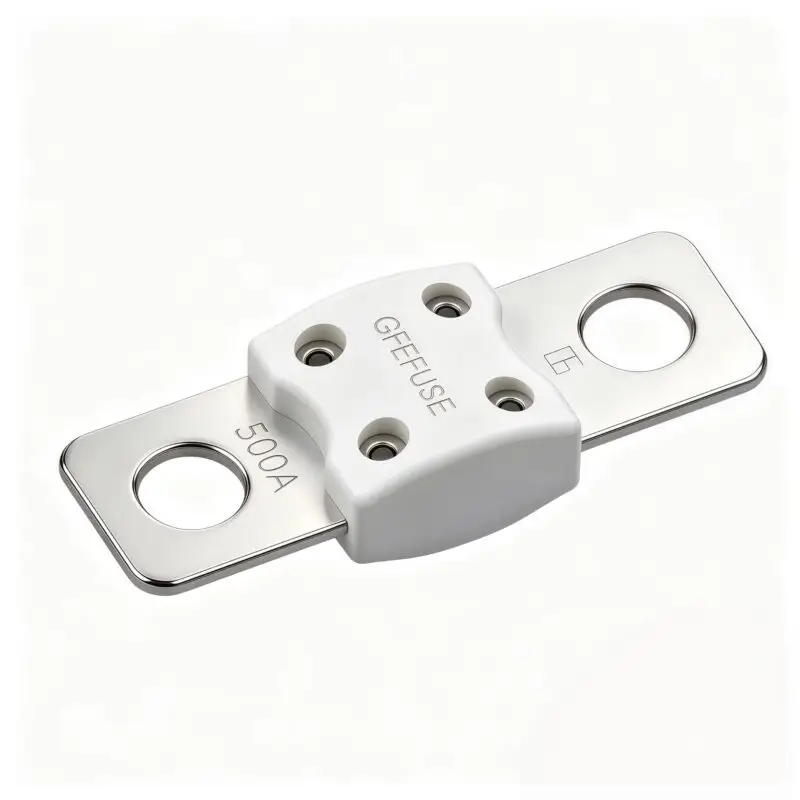
Introduction
Electric vehicle (EV) charging stations require reliable overcurrent protection to ensure safe and efficient operation. Choosing the right fuse for your EV charging installation is critical for protecting equipment, preventing fires, and complying with safety standards.
This comprehensive guide covers everything you need to know about selecting fuses for EV charging stations, including key specifications, installation best practices, and common mistakes to avoid.
Why Fuse Selection Matters for EV Charging
EV charging stations operate under unique electrical conditions that demand specialized fuse protection:
- High DC voltages: Fast DC chargers can operate at 400V to 1000V DC
- High current levels: Level 3 chargers can deliver 100A to 500A+
- Frequent switching: Charging cycles cause repeated inrush currents
- Safety-critical: Protects users, vehicles, and grid infrastructure
A poorly selected fuse can lead to nuisance tripping, equipment damage, or even fire hazards.
Key Fuse Specifications for EV Charging
1. Voltage Rating
The fuse voltage rating must be at least equal to the maximum circuit voltage. For EV charging:
- AC side (grid input): 240V AC (Level 2) or 480V AC (Level 3 three-phase)
- DC side (vehicle output): 400V DC, 800V DC, or 1000V DC depending on charger type
Important: Never use an AC-rated fuse on the DC side. DC arc extinction requires specialized fuse designs.
2. Current Rating
Select the fuse current rating based on the maximum continuous charging current:
| Charger Type | Typical Current | Recommended Fuse Rating |
|---|---|---|
| Level 1 (120V AC) | 12-16A | 15-20A |
| Level 2 (240V AC) | 30-80A | 40-100A |
| DC Fast (400V) | 100-200A | 125-250A |
| Ultra-Fast (800V+) | 300-500A | 350-630A |
Add a 25% safety margin above the maximum continuous current to prevent nuisance blowing.
3. Breaking Capacity
The breaking capacity (interrupting rating) must exceed the maximum available fault current at the installation point:
- Residential installations: 10kA minimum
- Commercial installations: 20kA to 50kA
- Industrial/utility sites: 50kA to 100kA+
Always consult local electrical codes for minimum breaking capacity requirements.
4. Fuse Class/Type
For EV charging applications, the following fuse types are commonly used:
| Fuse Type | Application | Characteristics |
|---|---|---|
| gG (general purpose) | AC side protection | Full-range breaking, time-delay |
| aR (semiconductor) | DC side, power electronics | Ultra-fast acting, protects IGBTs |
| gPV (photovoltaic) | Solar-powered chargers | DC-rated, handles reverse currents |
| gBat (battery) | Battery storage integration | High DC voltage, cycling resistant |
For the DC output side of fast chargers, aR high-speed fuses are typically recommended to protect sensitive power electronics.
Fuse Placement in EV Charging Systems
A typical EV charging installation requires fuses at multiple points:
AC Input Side
- Main disconnect fuse (grid protection)
- Charger input fuse (equipment protection)
DC Output Side
- DC bus fuse (protects rectifier and cabling)
- Vehicle connector fuse (protects vehicle and charging cable)
Auxiliary Circuits
- Control power fuse
- Communication module fuse
Each protection point requires appropriately rated fuses based on the specific circuit characteristics.
Installation Best Practices
1. Use Proper Fuse Holders
- Select fuse holders rated for the same voltage and current as the fuse
- Ensure proper torque on terminal connections
- Use finger-safe fuse holders for accessible locations
2. Consider Ambient Temperature
Fuse current ratings are typically specified at 25°C (77°F). For higher ambient temperatures:
- Above 40°C: derate fuse current by 5-10%
- Above 60°C: consult manufacturer derating curves
- Enclosed installations may run 10-20°C hotter than ambient
3. Coordinate with Upstream Protection
Ensure proper coordination between:
- Utility service fuse
- Main distribution breaker
- Charger input fuse
- DC output fuse
This ensures only the faulted circuit is interrupted, minimizing downtime.
Common Mistakes to Avoid
❌ Using AC Fuses on DC Circuits
AC fuses cannot reliably extinguish DC arcs, leading to fuse failure and potential fire.
❌ Undersizing the Fuse
Fuses that are too small will nuisance-trip during normal charging cycles, causing customer frustration.
❌ Oversizing the Fuse
Fuses that are too large fail to protect equipment during fault conditions, leading to costly damage.
❌ Ignoring Inrush Current
Charging equipment can draw 5-10x rated current during startup. Use time-delay fuses where appropriate.
❌ Neglecting Replacement
Fuses degrade over time, especially after multiple near-fault events. Replace fuses proactively during maintenance.
EssFuse Recommended Fuses for EV Charging
For Level 2 AC Chargers
- 10x38mm cylindrical fuses (gG class, 400V AC)
- Current ratings: 16A, 20A, 25A, 32A, 40A, 50A, 63A
- Breaking capacity: 50kA
For DC Fast Chargers
- Bolt-down high-speed fuses (aR class, 1000V DC)
- Current ratings: 100A, 125A, 160A, 200A, 250A, 315A, 400A, 500A, 630A
- Breaking capacity: 50kA to 200kA
For Solar-Powered Charging
- gPV photovoltaic fuses (1500V DC)
- Current ratings: 10A to 63A
- Suitable for strings up to 1500V DC
Conclusion
Selecting the right fuse for EV charging stations requires careful consideration of voltage, current, breaking capacity, and fuse type. By following the guidelines in this article and working with reputable fuse manufacturers, you can ensure safe, reliable, and code-compliant charging installations.
Remember: when in doubt, always consult a qualified electrical engineer and refer to local electrical codes and charger manufacturer specifications.
Related Articles:
- What Is an Electric Vehicle (EV) Fuse? Function, Types & Importance
- Qu'est-ce qu'un fusible CC ? Guide complet de la protection contre les surintensités CC
- Fast Acting vs Time Delay Fuse Usage & Selection Tips
Explore Our Products: