












Notizie e blog
Quali sono i fusibili a lama?

Introduzione
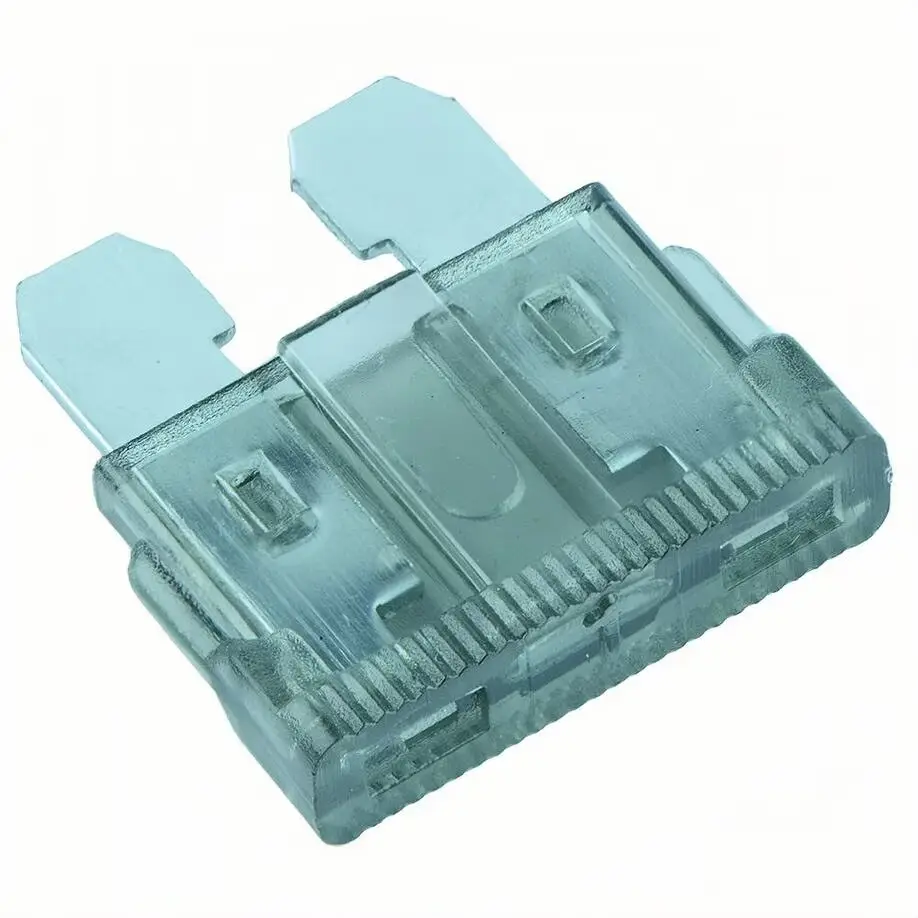
Fusibili a lama (also known as spade fuses, plug-in automotive fuses) are the most widely adopted low-voltage DC circuit protection components. They feature a transparent colored plastic housing and two flat metal blade terminals, designed to push directly into matching fuse holders or fuse blocks.
Inside every blade fuse is a thin sacrificial metal element. When current exceeds the rated value due to overload or short circuit, the element melts and breaks the circuit instantly. This stops excessive current, protects wiring, sensors, lights, motors and electronic modules, and prevents wire melting, overheating or fire risks.
Blade fuses follow the SAE J1284 standard and ISO 8820-3 specifications. Most are rated at 32VDC, suited for 12V and 24V automotive, marine, RV, solar and off-road DC systems. Compared with old glass tube fuses, blade fuses are compact, easy to install, quick to inspect and replace, with standardized color coding for fast ampere identificationSAE Mobilu….
How Does a Blade Fuse Work?
The working principle of blade fuses is simple and reliable.
Normal condition: Current flows through the metal element continuously; the element stays intact.
Overload or short circuit: Abnormally high current passes through the element, generating rapid heat.
Thermal melting: The metal strip melts and opens the circuit within its defined time-current curve.
Circuit isolation: Power is cut off before cables or loads suffer permanent damage.
Blade fuses are one-time sacrificial devices. Once blown, they cannot be repaired or reused and must be replaced with a matching rated fuse.
Main Types of Blade Fuses (Size & Form Factor)
Blade fuses are not interchangeable by amp rating alone. The physical footprint, blade pitch and height define compatibility with fuse holders. Below are the six mainstream families:
1. Standard ATO / ATC Blade Fuse
Size: Regular standard blade footprint
Amp range: 1A ~ 40A
Voltage: 32VDC
Difference: ATO = open element; ATC = sealed plastic body, better dust and moisture resistance
Typical uses: Older passenger cars, fuel pumps, headlight circuits, power windows, main accessory circuits
2. Mini Blade Fuse (ATM / APM)
Smaller than ATO/ATC
Amp range: 2A ~ 30A
Uses: Modern passenger vehicles, compact fuse boxes, interior lights, radio, control modules
3. Low Profile Mini Blade Fuse (LP-Mini)
Same blade spacing as standard mini fuse, but shorter height
Designed for dense, low-height fuse panels
Uses: New-model cars, EV auxiliary circuits, tight space harness layouts
4. Micro2 Blade Fuse (ATL)
Ultra-small two-blade design, the smallest common two-terminal blade fuse
Amp range: 2A ~ 30A
Uses: High-density automotive ECU modules, motorcycles, small off-road vehicles
5. Micro3 Blade Fuse (ATL3)
Unique 3-terminal design, one slot protects two separate circuits
Uses: Shared power circuits in modern vehicles, dual-load control boards
6. Maxi Blade Fuse
Large-size high-current blade fuse
Amp range: 30A ~ 120A
Uses: Main battery feed, heavy loads, starter circuits, large inverter, high-power marine systems
Important note: A fuse with the same amp rating but different size cannot fit into the holder. Mixing sizes causes loose contact, heat and intermittent failure.
Blade Fuse Color Code Chart (SAE J1284 Standard)
Color is a quick visual reference for amp rating. Always verify the stamped marking on the fuse body instead of relying only on color.
1A: Black
2A: Grey
3A: Violet
4A: Pink
5A: Tan / Beige
7.5A: Brown
10A: Red
15A: Blue
20A: Yellow
25A: Natural / Clear
30A: Green
40A: Orange Maxi blade fuses use separate color coding for higher amp values.
Core Technical Parameters of Blade Fuses
1.Rated Current (Amp Rating)
The maximum continuous current the fuse can carry steadily. It is the primary selection index.
2.Valore di tensione nominale
Most standard blade fuses are 32VDC. The fuse rated voltage must be equal to or higher than system working voltage. If system voltage exceeds the fuse rating, the arc cannot extinguish after blowing, creating arc flash danger.
3.Breaking Capacity / Interrupting Rating
The maximum short-circuit current the fuse can safely interrupt. Circuits close to battery terminals need higher interrupt rating.
4.Caratteristica temporale corrente
Most blade fuses are fast-blow. Slow-blow (time-delay) blade fuses are available for motors, pumps and solenoids with high startup inrush current.
5.Terminal & Housing Material
PA66 flame-retardant plastic housing; tin-plated or zinc-plated blades for corrosion resistance and stable conductivity.
6.Intervallo di temperatura di funzionamento
Common: -40°C ~ +125°C. High ambient temperature will reduce actual carrying capacity and require derating.
Key Benefits of Blade Fuses
1.Simple push-in installation and replacement, no special tools required
2.Transparent housing, visual check for blown element
3.Standardized SAE / ISO dimensions, widely compatible with global fuse holders
4.Compact footprint, suitable for dense automotive fuse boxes
5.Stable melting characteristic, consistent protection performance
6.Wide amp selection from low signal circuits to high-power DC loads
7.Available with certifications: UL, RoHS, REACH, SAE J1284
Common Applications of Blade Fuses
1.Automotive: Passenger cars, trucks, SUVs, electric vehicles, motorcycles
2.Marine: Boats, yachts, marine DC lighting, pump circuits
3.RV, camper, caravan and off-grid solar 12V/24V systems
4.Off-road vehicles, ATV, UTV, construction machinery
5.DC accessory harnesses, battery distribution blocks, auxiliary power panels
Blade Fuse vs Glass Tube Fuse
Blade fuses have replaced glass tube fuses in nearly all modern DC vehicle systems. Glass fuses are bulkier, fragile and harder to inspect. Blade fuses are vibration-resistant, easier to service and better suited for automotive vibration environments. Replacement requires matching fuse holder type; you cannot directly swap blade fuses into glass fuse sockets.
FAQ
Q: What is the difference between ATO and ATC blade fuses?
A: They share the same footprint and amp range. ATO has an open element; ATC is sealed. ATC offers better protection against dust and moisture.
Q: Can I use a higher amp blade fuse to replace a blown one?
A: No. Higher amp fuses remove wire protection. The wiring harness may melt before the fuse opens and cause fire hazards. Always use the same rating and characteristic.
Q: How to tell if a blade fuse is blown?
A: Check visually: the metal strip inside the transparent body is broken. You can also test continuity with a multimeter or use a test light on the top test points.
Q: Are mini and low-profile mini blade fuses interchangeable?
A: They have identical blade pitch, but low-profile mini is shorter in height. If the fuse box has height limits, they cannot be mixed.
Q: Can blade fuses work on AC circuits?
A: Standard 32VDC blade fuses are designed for DC. They are not recommended for AC use unless the datasheet explicitly states AC rating.
Conclusione
Blade fuses are the global standard for low-voltage DC overcurrent protection. Their standardized sizes, color coding, simple structure and low cost make them the preferred choice for automotive, marine, RV and solar installers.
Before ordering or replacing blade fuses, confirm four basics: correct form factor, rated current, voltage rating and breaking capacity. Matching only color or amp number is a common mistake that leads to unsafe circuit protection.