












News & Blog
How to Choose the Right High Current Fuse for Energy Storage Systems

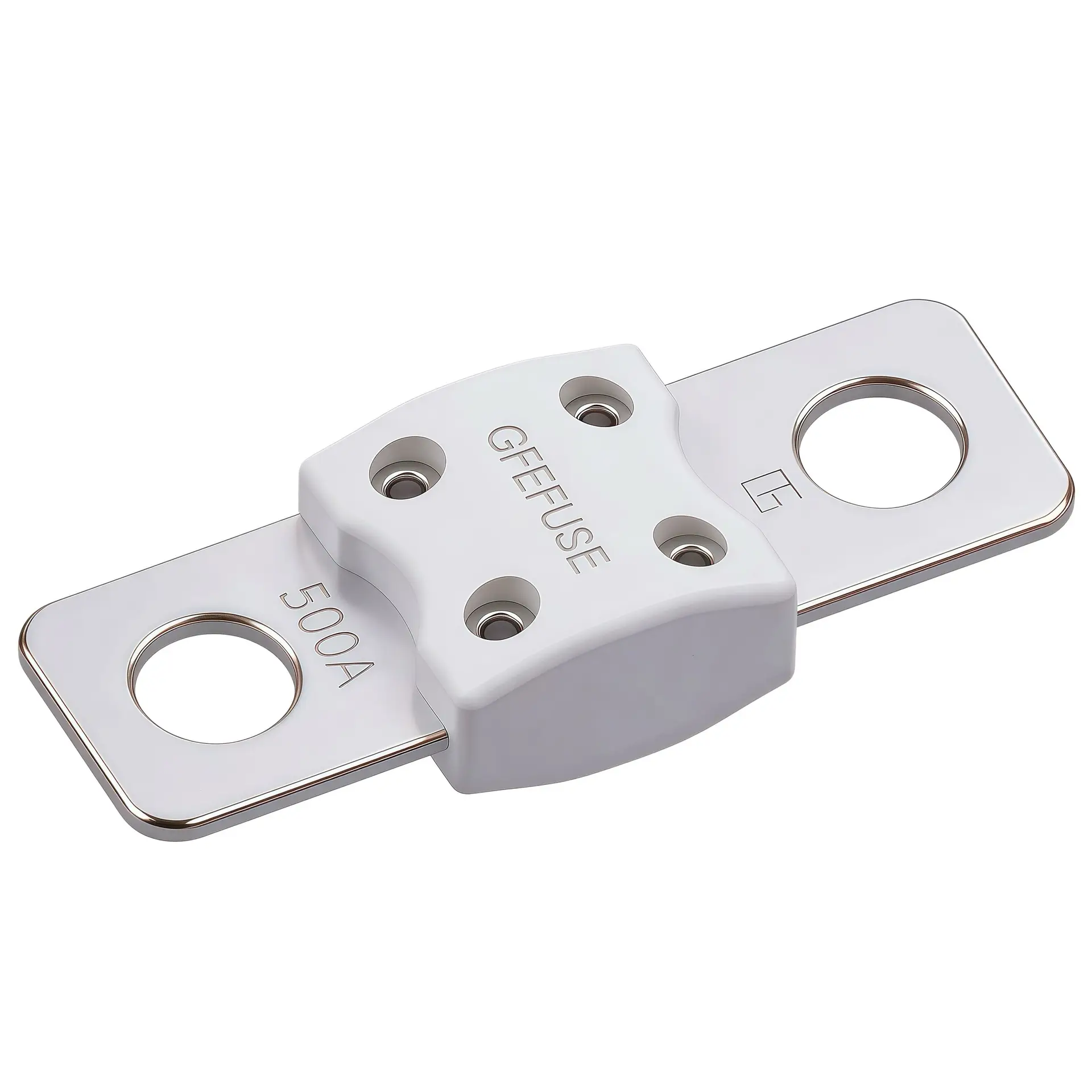
Energy storage systems (ESS) have become the core infrastructure of renewable energy projects, solar power stations, commercial battery cabinets, and industrial backup power supplies. Unlike traditional household or low-power electrical equipment, energy storage devices face high current surge, frequent charge-discharge cycles, and unstable grid voltage. A mismatched high current fuse will cause false tripping, battery damage, system downtime, or even serious fire hazards.
Choosing the right high current fuse is essential to improve energy storage system safety, extend battery service life, and ensure stable long-term operation. This article explains the key factors for selecting energy storage fuses and helps engineers and procurement teams make accurate model selections.
1. Understand the Working Characteristics of Energy Storage Systems
Energy storage systems have completely different working conditions from ordinary industrial equipment. Before selecting a fuse, it is necessary to clarify three core operating features:
First, high current instantaneous surge. When the battery pack starts, discharges heavily, or connects to the grid, the instantaneous current often far exceeds the rated working current. If the fuse is too sensitive, it will trip frequently and affect normal power generation and power supply.
Second, long-cycle charge and discharge. Energy storage equipment runs 24 hours a day with repeated charge and discharge. Ordinary fuses are prone to aging and thermal fatigue under long-term fluctuating current, resulting in reduced protection accuracy.
Third, strict safety standards. Energy storage projects require high requirements for overcurrent protection, short-circuit breaking capacity, and temperature resistance. Only fuses with complete certifications can meet project bidding and grid access standards.
2. Key Parameters for High Current Fuse Selection
1 Rated Current
The rated current of the fuse cannot be equal to the system’s normal working current. For energy storage systems, the fuse rated current should be 1.2 to 1.5 times the continuous working current. This margin effectively avoids false tripping caused by current fluctuation and temperature rise.
For high current scenarios above 100A, bolt-on fuses are more suitable than cartridge fuses because they provide more stable conductivity and lower temperature rise under long-term high current load.
2 Breaking Capacity
Short-circuit current in energy storage battery cabinets is extremely high. Once a short circuit occurs, the current can reach thousands of amperes in an instant.
The fuse must have a high breaking capacity to cut off the circuit instantly and prevent arc explosion and battery combustion. Most mainstream energy storage projects require fuse breaking capacity up to 200kA.
3 Response Speed
Energy storage fuses need to balance fast protection and anti-interference capability.
- Fast-acting fuses: suitable for short-circuit protection, quickly isolate faults to protect battery cells.
- Time-delay / slow-blow fuses: tolerate instantaneous current surge, avoid tripping during equipment startup and peak discharge.
Most commercial energy storage systems choose slow-blow high current fuses to adapt to complex current changes.
4 Operating Temperature and Environmental Adaptability
Outdoor energy storage power stations and container energy storage equipment face high temperature, humidity, and vibration environments. Industrial-grade high current fuses can work stably from -40°C to 85°C, with strong vibration resistance and aging resistance.
3. Common High Current Fuse Types for ESS
1 Bolt-on High Current Fuse
Bolt-on fuses are the most widely used type in energy storage battery packs, UPS systems, and industrial power distribution. They feature large current bearing capacity, low loss, convenient installation, and stable contact.
Current ranges usually cover 100A to 600A, fully matching mainstream battery cabinet specifications.
2 Square Body High Current Fuse
Square fuses are designed for compact battery module layouts. With small size and high breaking capacity, they are suitable for densely arranged energy storage systems with limited internal space.
4. Common Selection Mistakes to Avoid
1 Blindly pursuing large current
Excessively high rated current will cause the fuse to fail to act when minor overcurrent occurs, losing protection function and leading to battery overheating and aging.
2 Ignoring working environment temperature
The actual current carrying capacity of the fuse will decrease in high-temperature environments. If only the standard parameter is referred to without temperature margin calculation, hidden safety risks will occur.
3 Using ordinary industrial fuses instead of ESS dedicated fuses
Ordinary fuses cannot withstand long-term charge-discharge cycles, and are prone to aging failure after several months of operation, bringing huge hidden dangers to energy storage power stations.
5. Why Choose ESS Special High Current Fuses from Essfuse
Essfuse focuses on the R&D and production of industrial high current fuses for energy storage, new energy vehicles, and power distribution systems.
- Full range of high current specifications: 100A–600A bolt-on fuses for ESS
- High breaking capacity up to 200kA
- Stable slow-blow performance, anti-surge and anti-false trip
- Industrial high and low temperature resistance, suitable for outdoor energy storage stations
- Complete certifications, supporting global project bidding and certification requirements
- Factory direct supply, customizable specifications and logos
FAQ
1: What fuse is best for battery energy storage systems?
Slow-blow bolt-on high current fuses are the best choice for most commercial and industrial energy storage systems, balancing safety stability and anti-interference performance.
2: How to prevent fuse false tripping in ESS?
Reserve a 1.2–1.5 times current margin, choose slow-blow type, and select industrial-grade fuses adapted to high-temperature environments.
3: Can ordinary fuses replace ESS dedicated fuses?
Not recommended. Ordinary fuses lack cycle resistance and temperature resistance for long-term charge-discharge environments and may fail prematurely.
Conclusion
Energy storage system safety depends heavily on reasonable overcurrent protection configuration. When selecting high current fuses, engineers must comprehensively consider rated current, breaking capacity, response type, and environmental adaptability, instead of only referring to simple current parameters.
Professional ESS dedicated fuses can effectively reduce system failure rates, avoid safety accidents, and extend the overall service life of energy storage equipment. For stable and reliable high current fuse solutions, Essfuse provides one-stop industrial fuse support for global new energy projects.